
PandaLoom-Movies & Dramas
古言短剧Entertainment
1.918.00 Reviews
- Version
- 1.7.13
- Installs
- 50.00K
- Age Rating
- Everyone
Screenshots
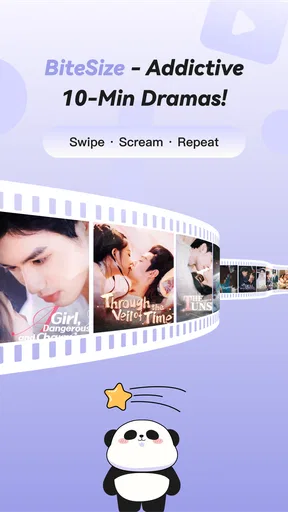
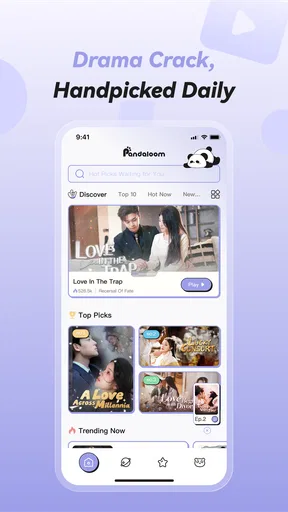
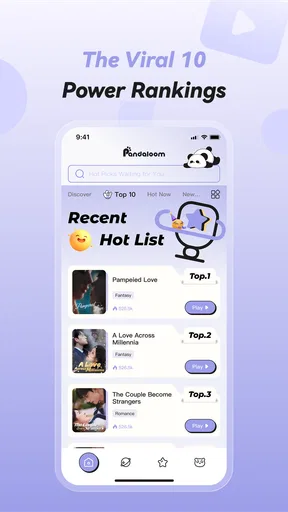

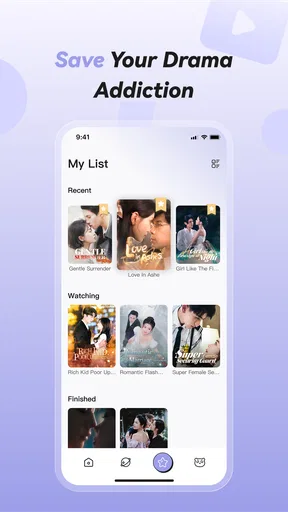
Our Review of PandaLoom-Movies & Dramas
 Analysis by Appyee
I approached PandaLoom-Movies & Dramas as a quick entertainment option rather than as a replacement for every streaming service on my phone. It is a short-drama app from 古言短剧, built around a cute, kawaii visual identity and aimed at people who prefer brief episodes they can sample between other tasks. That sounds simple, but the real question is whether the experience remains comfortable when the quality of your connection changes.
My overall impression is mixed. The presentation has a distinct personality, and the short-drama format can suit a lunch break, a commute with reliable reception, or a few quiet minutes before bed. At the same time, the modest public response matters: the app currently sits at a 1.9 average from 57 ratings and has 18 written reviews. I would therefore treat it as an app to test personally, not one I would recommend blindly to everyone.
How PandaLoom feels when the network is doing the work
The central appeal is easy to understand. Instead of asking me to commit to a long film, the app presents drama in smaller pieces, with the panda-themed visual style making the interface feel lighter and less formal than a traditional television platform. That can be useful when I want an immediate story, but do not want to browse a large catalogue or remember where I left off in a long series.
Connectivity becomes part of that experience almost immediately. Short episodes encourage frequent starting and stopping, so each transition is a small test of the connection. With a stable mobile or Wi-Fi signal, this rhythm feels natural: open the app, choose something, watch for a while, and leave when I am ready. When reception is inconsistent, the same design can feel less forgiving because a short viewing session has less room for interruptions.
I would be especially careful about judging the app during a busy commute. A train journey with changing reception, a lift ride, or a crowded public network is not the fairest environment for any video service, but short dramas make the contrast noticeable. A delay before a brief episode can take up a large part of the time I had planned to spend watching. For reliable use, I would start an episode before moving between coverage areas rather than waiting until the connection is already unstable.
There is also a practical difference between browsing and watching. Browsing may feel quick enough even when the network is only moderate, while video playback usually demands more consistent delivery. I would not assume that a screen loading successfully means the entire viewing session will be equally smooth. If I am deciding whether to continue a series, I prefer to give the first episode enough time to reveal how the app behaves on my usual connection instead of making a decision after a single loading moment.
Why the short format works for some mobile routines
The strongest use case is a fragmented day. I can imagine opening it while waiting for an appointment, during a coffee break, or after finishing a small household task. The app’s compact drama concept is better suited to those moments than a cinema-style movie that needs a long, uninterrupted block of attention. The kawaii presentation also gives it a more playful tone, which may appeal to viewers who find conventional drama apps visually heavy.
That convenience has a trade-off. A short episode is not automatically a complete experience. If a story is divided into many small parts, I may become more dependent on repeated loading and repeated navigation. This is where I would use a simple routine: choose a stopping point before opening the app, watch only while the signal is dependable, and avoid beginning a new segment when I have to leave immediately. It sounds minor, but it prevents the app from turning a five-minute break into a sequence of interrupted starts.
The app is also more suitable for personal viewing than for a shared living-room session. Traditional television apps often work better when several people are choosing a full-length programme together. PandaLoom’s appeal is more intimate and spontaneous: one person, one phone, one short viewing window. If I wanted a broad selection for a family evening, I would lean toward a larger mainstream streaming service instead.
For younger viewers, the Everyone content rating makes the app easier to consider in a general household context. I would still make the choice based on the individual dramas and the child’s maturity, because an age label is not the same thing as a guarantee that every story will suit every viewer. For adults who want romance, historical drama, or other short-form storytelling, the rating is less important than whether the pacing and presentation match their taste.
What happens when playback or loading goes wrong
Any app that depends on a network needs a sensible recovery habit, and I would not rely on repeatedly tapping the same control when a video stalls. My first step would be to pause for a moment and see whether the connection recovers. If the problem continues, I would leave the episode, return to the previous screen, and try again rather than rapidly opening several requests. That approach is less frustrating and avoids turning one weak connection into a cluttered session.
A useful distinction is between a temporary network problem and an app problem. If other services on the phone are also slow, the connection is the likely cause. If ordinary browsing works but PandaLoom repeatedly fails at the same point, I would close and reopen the app, then check whether the issue is limited to one drama or affects everything. This does not guarantee a fix, but it gives me a clearer idea of whether the problem is local to a title, the app session, or the network.
I would also avoid testing recovery while moving quickly through areas with poor reception. A better method is to wait until I reach stable Wi-Fi or a stronger mobile signal, then reopen the app and continue calmly. If the service returns to the same place, that is convenient; if it does not, I would keep track of the last episode or scene manually. Because short-drama viewing often involves many small chapters, remembering the exact stopping point can be more important than it would be in a single long film.
One of the less obvious trade-offs is that frequent retries can make the experience feel worse than the original failure. A user may assume the app is broken when the real issue is a connection that has not recovered. I would give each retry a clear purpose: wait, reopen once, and then change the network environment. If none of those steps helps, I would stop rather than spend an entire break troubleshooting entertainment.
Using it carefully on mobile data
I would not open any video app casually when I am close to a monthly data limit, and that caution applies here even more when the intended session is a chain of short episodes. Small episodes can encourage “just one more” viewing, making the total session longer than planned. The practical solution is to decide how long I want to watch before starting and to use Wi-Fi for extended sessions whenever possible.
My preferred data-conscious workflow would be simple. I would browse and choose a drama while connected to a trusted Wi-Fi network, watch short sessions on mobile data only when necessary, and avoid repeatedly restarting the same episode after a failed load. I would also pay attention to the phone’s own data controls rather than assuming the app will manage consumption in the way I prefer. These are ordinary precautions, but they are particularly useful for a service built around continuous video delivery.
The purchase model deserves attention as well. The app is free to download, but in-app purchases range from $4.99 to $499.99 per item. That is a very wide span, so I would not treat the free entry point as the complete cost picture. Before paying, I would read each purchase screen carefully, check exactly what the item unlocks, and make sure the amount matches what I intend to spend. This is especially important when a viewer is watching quickly and tapping through several episodes.
I would set device-level purchase protections before handing the phone to a child or allowing someone else to browse. The Everyone rating makes the app broadly accessible, but it does not remove the need for spending boundaries. For my own use, I would decide in advance whether I am willing to pay for a particular story and stop if the purchase path becomes unclear. A free app can still require disciplined attention when optional purchases are present.
Who will enjoy it, and who should choose another app
I think PandaLoom is most appealing to viewers who enjoy compact dramas, like a cute interface, and often watch alone on a phone. It makes sense for someone who wants a quick narrative break rather than a large entertainment hub. It may also suit a user who is curious about a focused short-drama catalogue and does not mind evaluating the service gradually.
I would be more hesitant to recommend it to someone who expects the polish, scale, and predictable playback of a major streaming platform. The low average rating is a warning to manage expectations, even though ratings alone cannot explain every individual complaint. Someone who needs dependable viewing during travel, wants a wide range of established films, or dislikes purchase prompts may be happier with a familiar subscription service.
It is also not my first choice for a household that shares one account across several people. A general streaming alternative usually offers a more established living-room experience, while PandaLoom is more naturally used in brief, personal sessions. On the other hand, if large services feel overwhelming and I only want to sample short dramas without committing to a long programme, this app has a clearer reason to exist.
Another important trade-off is attention. The short format is convenient, but it can encourage constant continuation. I would use it intentionally, especially late at night or during work breaks. Setting a personal limit—such as one story segment or one planned session—helps preserve the benefit of convenience without letting the app quietly consume the time it was meant to fill.
Version, access, and the practical decision
The current version is 1.7.13, and the app runs on Android 5.0 or later. That broad system requirement makes it relevant for people using older Android phones, provided their device can handle the actual viewing experience comfortably. I would still keep enough free storage and a stable connection available, because compatibility with an operating-system version does not automatically mean every older handset will feel equally responsive.
It was released on July 10, 2025, and has passed 50K installs. That gives the app a real audience, but not the same level of familiarity as the biggest entertainment names. The developer, 古言短剧, has chosen a very specific identity instead of presenting a generic video catalogue. I see that as both a strength and a limitation: the concept is memorable, yet the app will only feel worthwhile if its particular selection matches what I want to watch.
Because the app is free to install, my advice is to approach it as a low-commitment trial while staying alert to the paid options. I would install it on the phone I actually use, test it on both Wi-Fi and ordinary mobile reception, and see whether the loading rhythm fits my routine. That test is more useful than judging the kawaii appearance alone, because the network conditions around me will shape the experience every time I watch.
My connectivity verdict is cautious rather than enthusiastic. PandaLoom can work well as a small, mobile entertainment companion when the signal is steady and my expectations are focused on short dramas. Its visual personality gives it some charm, and the format fits spare moments better than a long-form service. However, I would skip it if uninterrupted playback, a broad mainstream catalogue, or completely predictable spending is essential.
In the end, I would recommend trying it only to a friend who specifically enjoys short drama and does not mind experimenting with a less established app. I would suggest using Wi-Fi for longer sessions, limiting retries when reception fails, and checking every purchase screen before confirming anything. For that audience, the app may earn a place among casual viewing options; for everyone else, a more mature streaming alternative is likely the safer everyday choice.
Verdict
Strengths of PandaLoom-Movies & Dramas
- Large catalog of movies and dramas in one convenient app.
- Simple interface makes browsing and finding titles straightforward.
- Useful search tools help locate specific movies or series quickly.
- Supports discovering new content through organized categories.
- Convenient option for users who prefer watching on mobile devices.
Limitations of PandaLoom-Movies & Dramas
- Content availability may vary by region and change without notice.
- Some titles may lack subtitles or offer limited language options.
- Video quality can depend heavily on your internet connection.
- Frequent ads may interrupt browsing or viewing sessions.
- The app may require significant storage for cached or downloaded content.
Similar Picks in This Category
View All
Google Play Games
Google LLC3.9

Netflix
Netflix, Inc.4.8

YouTube Kids
Google LLC4.2

Disney+
Disney4.4

Prime Video
Amazon Mobile LLC4.7

Steam
Valve Corporation3.2
Frequently Asked Questions
What is PandaLoom-Movies & Dramas?
PandaLoom-Movies & Dramas is an entertainment app designed for users who enjoy browsing and watching movies, television dramas, and other video content in one place. Its catalog, available categories, playback options, and supported languages may vary by region and app version. Before downloading, check the current store description to confirm whether the titles you want are available on your device.
Is PandaLoom-Movies & Dramas free to download and use?
The application may be available to download at no initial cost, but that does not necessarily mean every feature or title is free. Some content can require a subscription, one-time payment, account registration, or may include advertising. We recommend reviewing the pricing details shown in the official Google Play Store or Apple App Store listing before starting playback or entering payment information.
Can I watch movies and dramas offline with PandaLoom?
Offline viewing depends on the features enabled in the current version of PandaLoom-Movies & Dramas and on the licensing terms for individual titles. If downloads are supported, users may need to sign in, have sufficient storage space, and download content while connected to Wi-Fi. Downloaded videos can also expire or become unavailable when a license changes.
Does PandaLoom-Movies & Dramas work on Android and iPhone?
Compatibility depends on the operating system version, device model, and the official availability of the app in your country. Android users should check the required Android version and permissions on Google Play, while iPhone and iPad users should review the App Store compatibility information. Older devices may experience slower loading, limited playback quality, or missing features.
Is PandaLoom-Movies & Dramas safe to install?
The safest way to install PandaLoom-Movies & Dramas is through its official Google Play Store or Apple App Store listing rather than an unknown third-party website. Before installing, review the developer name, recent user feedback, requested permissions, privacy policy, and update history. Avoid modified APK files, and remember that streaming services may collect account, device, and viewing information.
